

Rescued Sick Feral Kitten Thrives After New Mom Refuses to Accept the Wrong Diagnosis
Share:
There are stories that are heartwarming. There are stories that are a little gross. And then there is the story of Lint, which is both of those things simultaneously and entirely unapologetic about it.
It begins, as the best ones often do, with someone refusing to mind their own business.
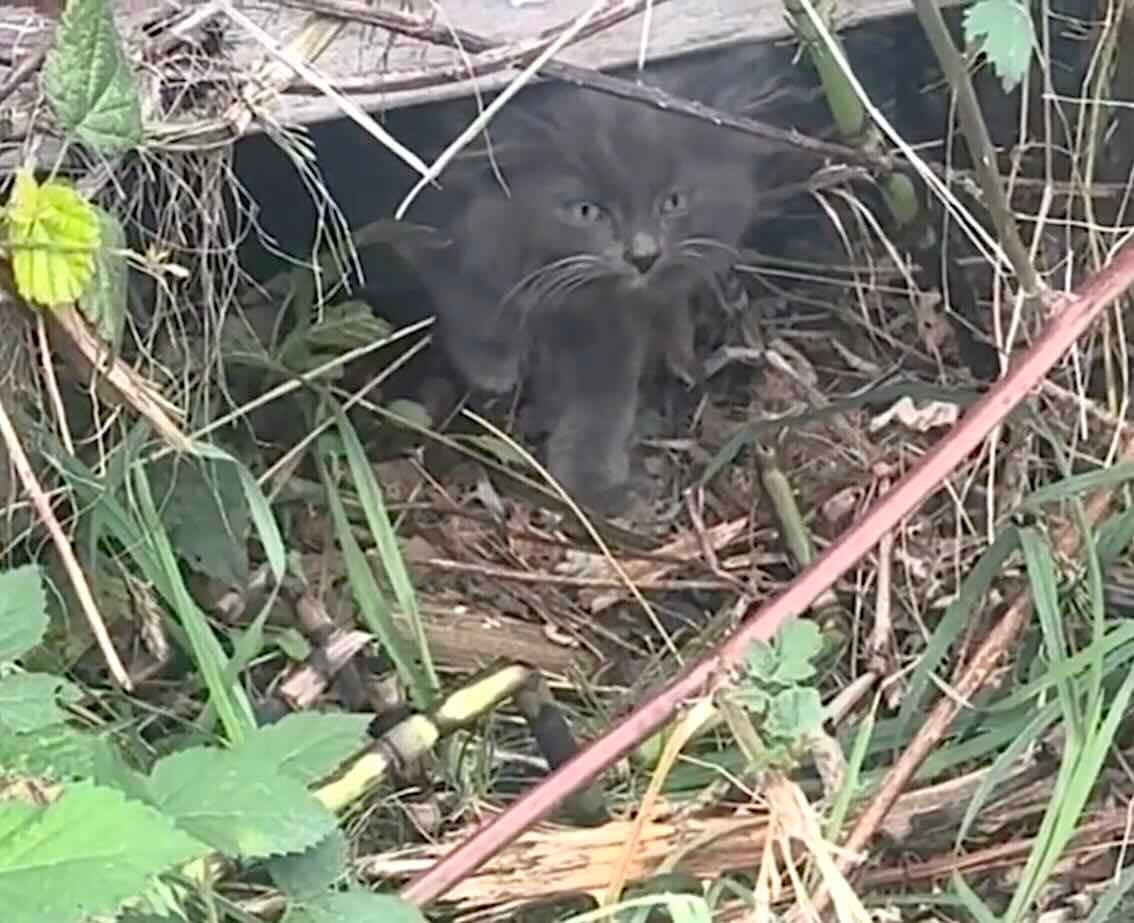
Neighbours near Shelby's home kept reporting the same alarming sight — small kittens darting in and out of traffic, tiny and fast and completely indifferent to their own survival.
Shelby assessed the situation and made a decision. She grabbed a kennel and some food and went to do something about it. The food went in the kennel. A kitten followed. The door closed.
And the kitten, outraged, immediately threw himself shoulder-first into the door like a small furious creature who had not yet grasped the concept of a lost cause. He was unsuccessful. Shelby had her kitten.

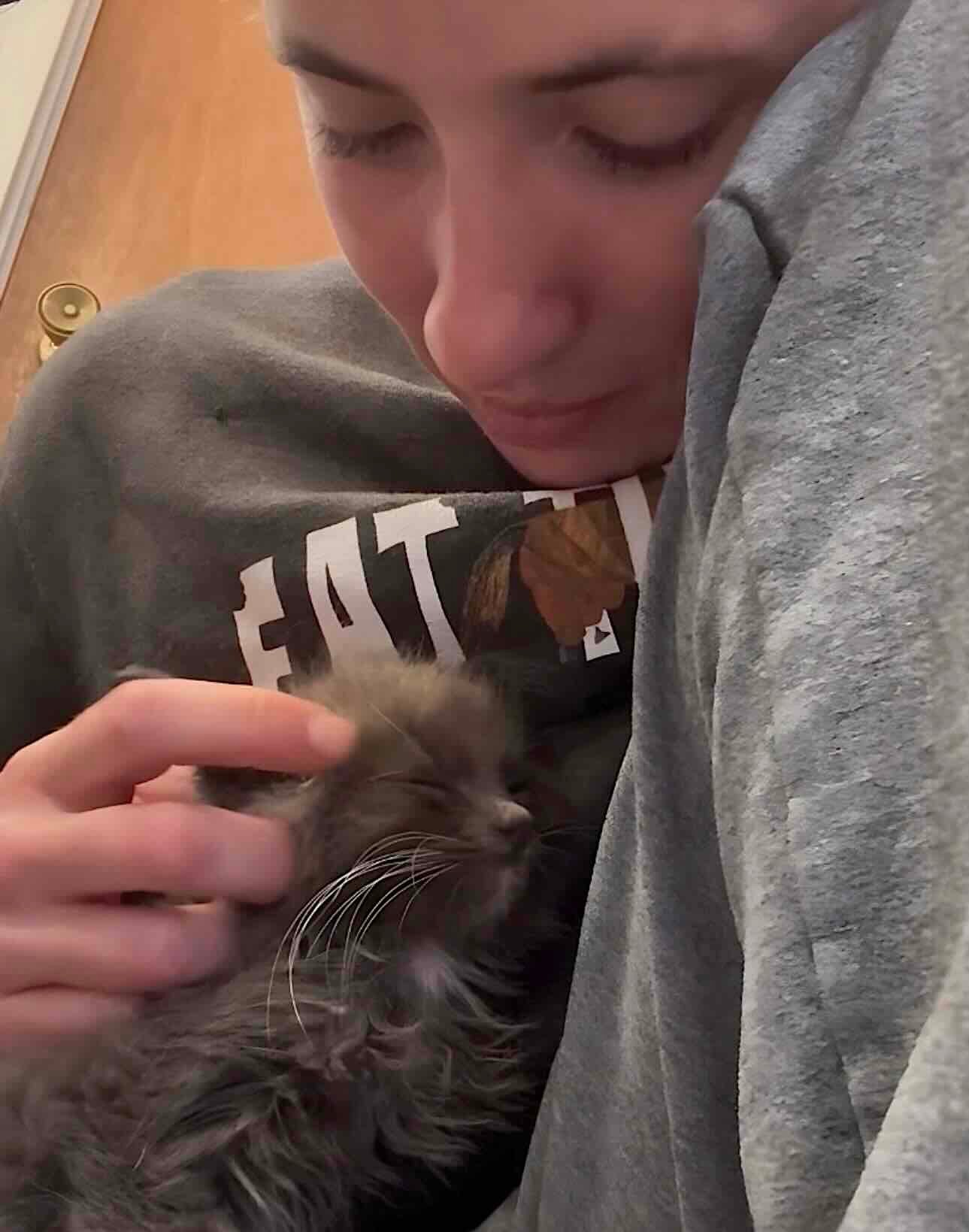
He was terrified, and she was sensible enough not to push it. Instead of forcing contact on a creature who had every reason in the world to distrust humans, she offered wet food on a fork and let him make his own decisions at his own pace.
It didn't take long. The moment Lint understood that this particular human came with unlimited food and hands that felt good, the feral firecracker softened into a purring machine, and the arrangement was settled.
But underneath that purring was a kitten in genuinely dire shape.
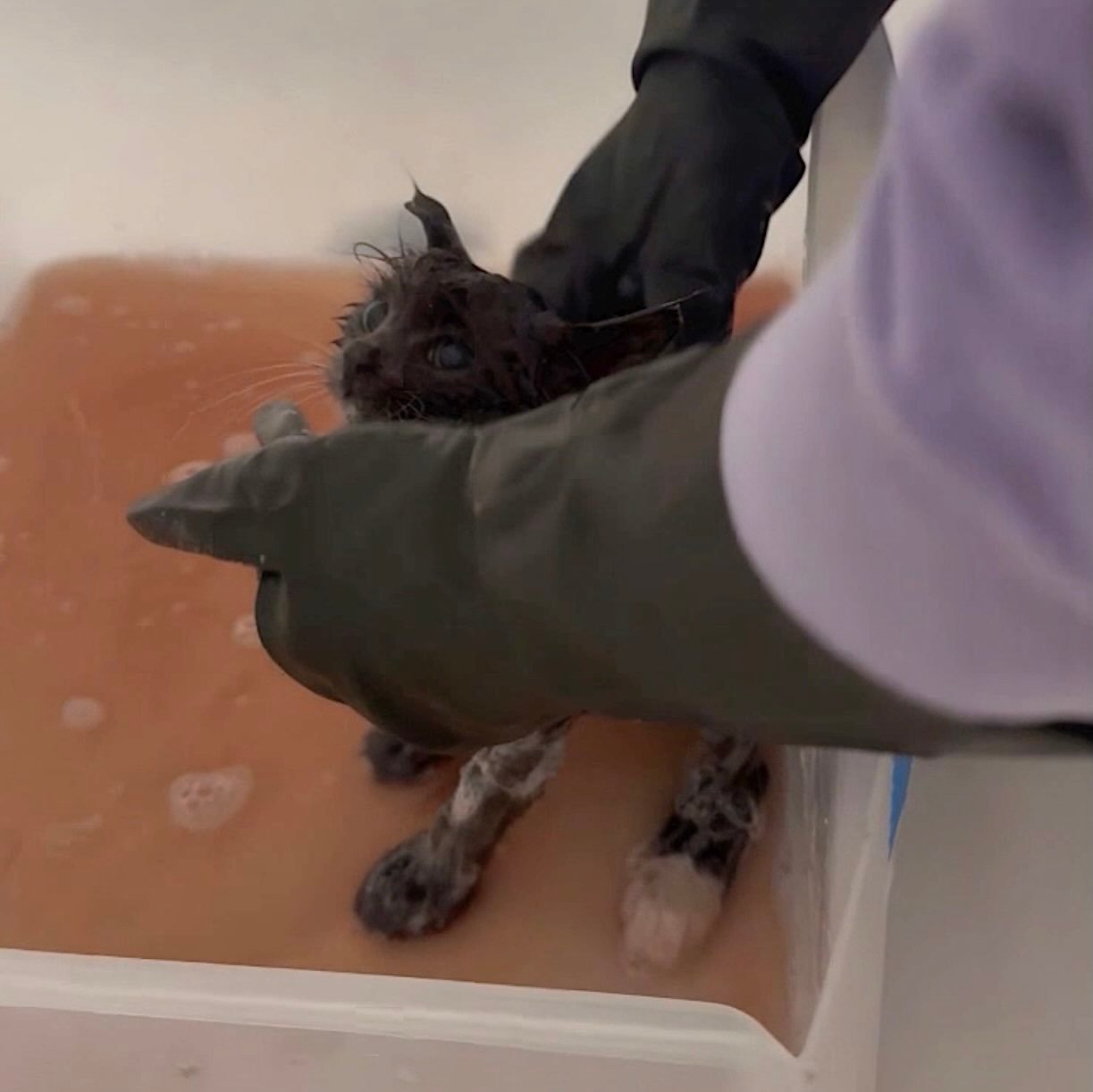
The flea bath came first, and what followed was not for the faint-hearted. The water ran red. Lint had been hosting what Shelby would later describe as an entire flea civilisation — an independent nation of fleas, probably with infrastructure — and they departed in vast numbers, some pulled off directly, others leaving in the days that followed.
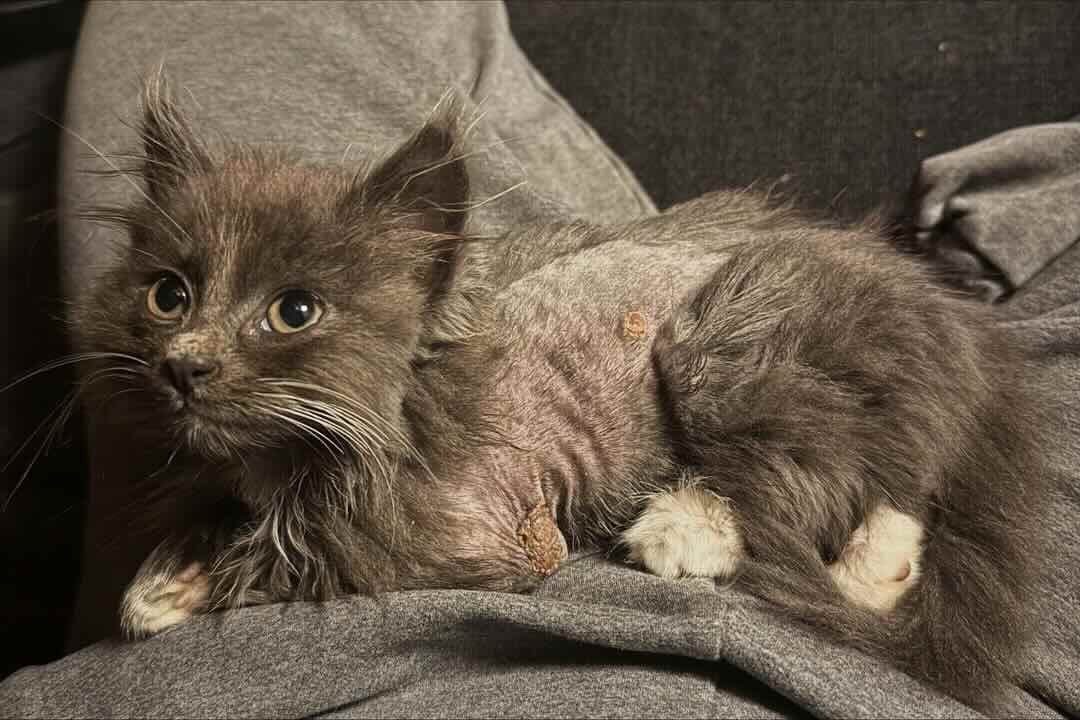
Beneath all of it, once the fur was wet, were open wounds nobody had known about until that moment. His belly was enormous, not from health but from parasites, while the rest of him was skeletal — ribs and spine plainly felt beneath his coat, a tiny body that had been giving everything it had just to keep going.
At the vet, he weighed a pound and a half. Officially emaciated, officially a miracle for still being alive. The wounds were cleaned and treated, the worst of the damage addressed, and Lint was sent home to a bathroom quarantine with unlimited wet food, cat milk, supplements, and as many pets as he wanted.
He accepted all of it with remarkable good nature, because Lint — despite everything — was from the very beginning an exceptionally cheerful creature. The circumstances had been terrible. His disposition had somehow emerged from them entirely intact.
Queso, Shelby's one-year-old orange cat, had been losing his mind about the newcomer since day one, pressing his paws under the bathroom door with the frantic energy of someone who has just discovered that the best thing in the world is being kept from him by a door.
When they finally met face to face, Queso looked like he had won something. Lint marched straight up to him, tiny and completely unbothered, and the friendship began quietly and immediately and has never really stopped.
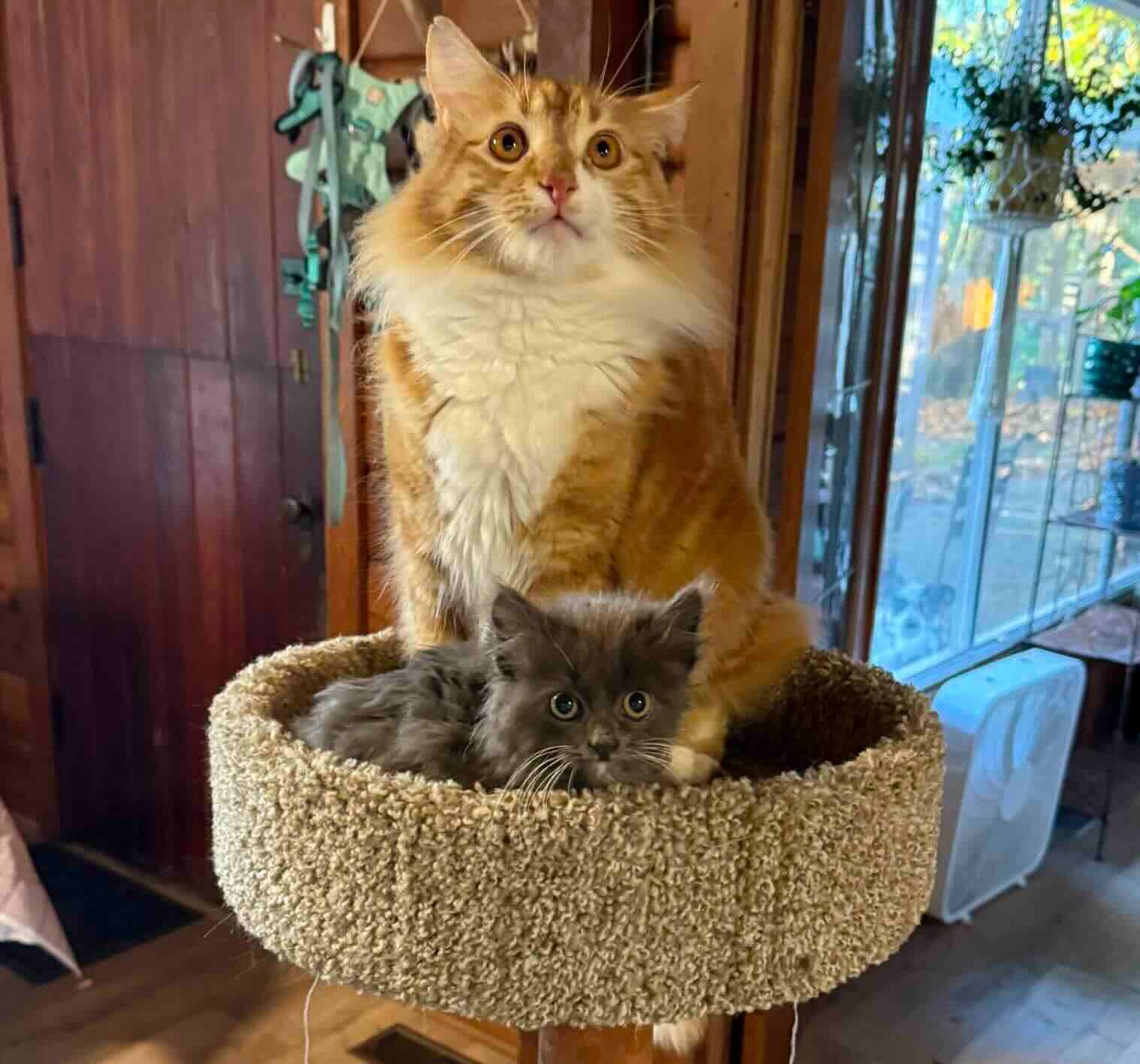
Lint grew. He played. He climbed things. He became, steadily and wonderfully, a normal kitten — except for one persistent and increasingly confusing problem.
The soft stools had been there from the start, dismissed as the aftermath of near-starvation and digestive damage. But they didn't go away, and other things piled up alongside them.
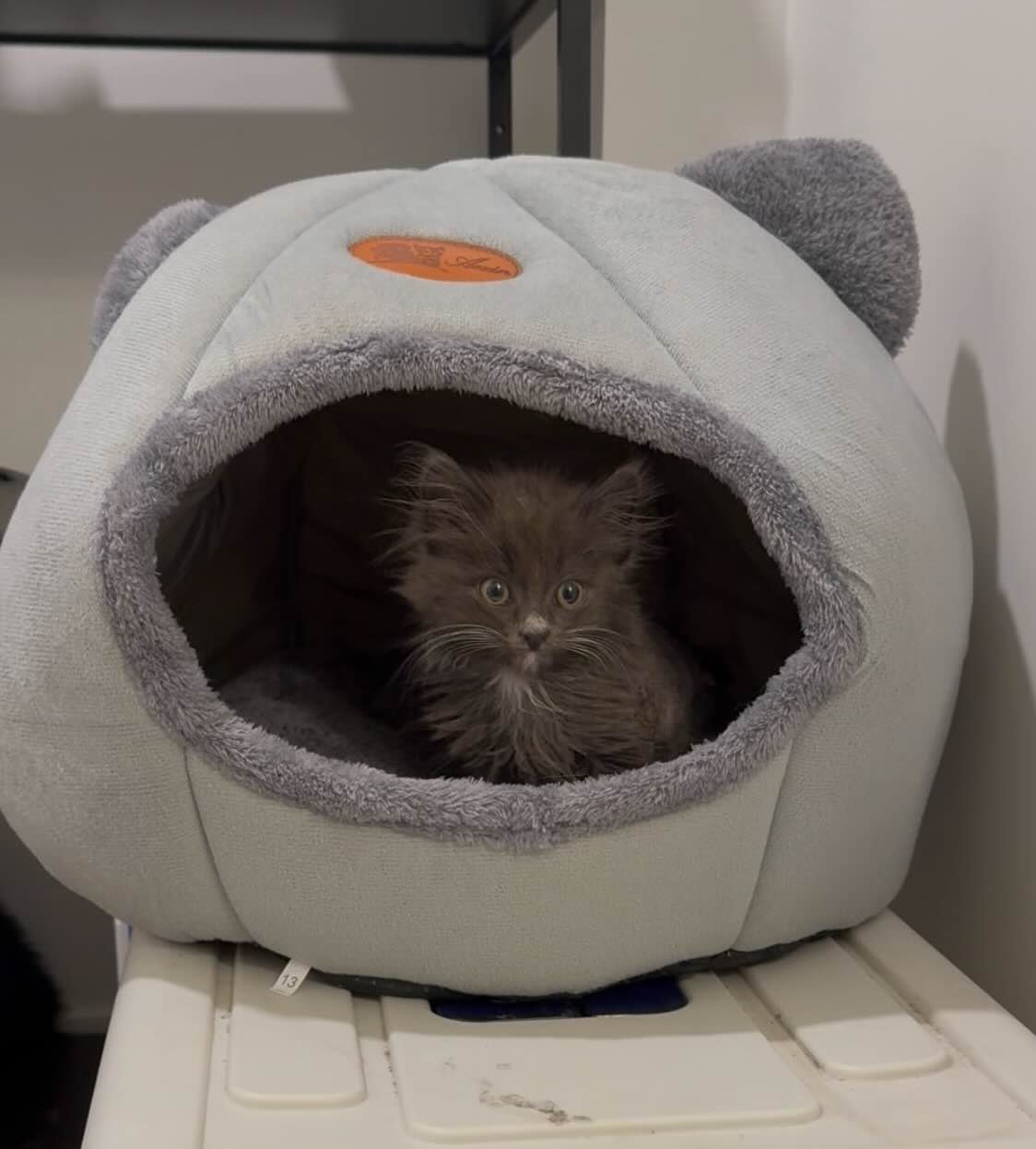
Bloating after every meal. A frantic, relentless hunger that no amount of food could seem to satisfy — as though his body genuinely believed it was still out in that blackberry bush and couldn't be convinced otherwise.
His weight plateaued, then started dropping. His intestines were visibly inflamed. His litter box habits deteriorated in ways that were, to put it diplomatically, noticeable to everyone in the household.
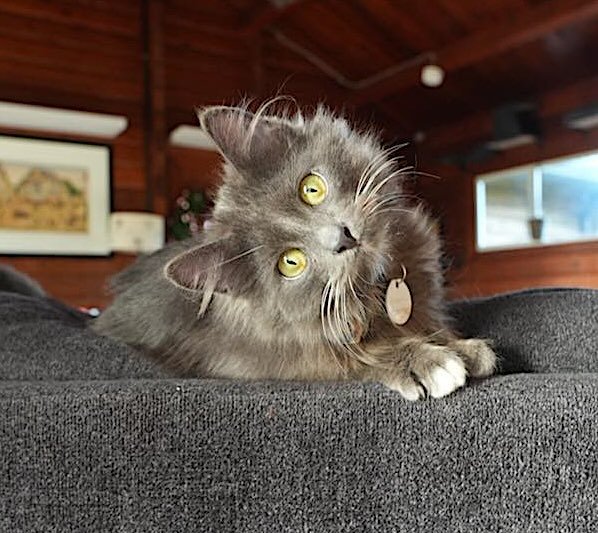
Dietary changes, antibiotics, prescription food — the vet tried everything, and nothing held.
A blood panel eventually flagged thyroid levels consistent with hyperthyroidism, a condition almost exclusively associated with elderly cats. Shelby started the medication, but something didn't sit right. She kept digging.
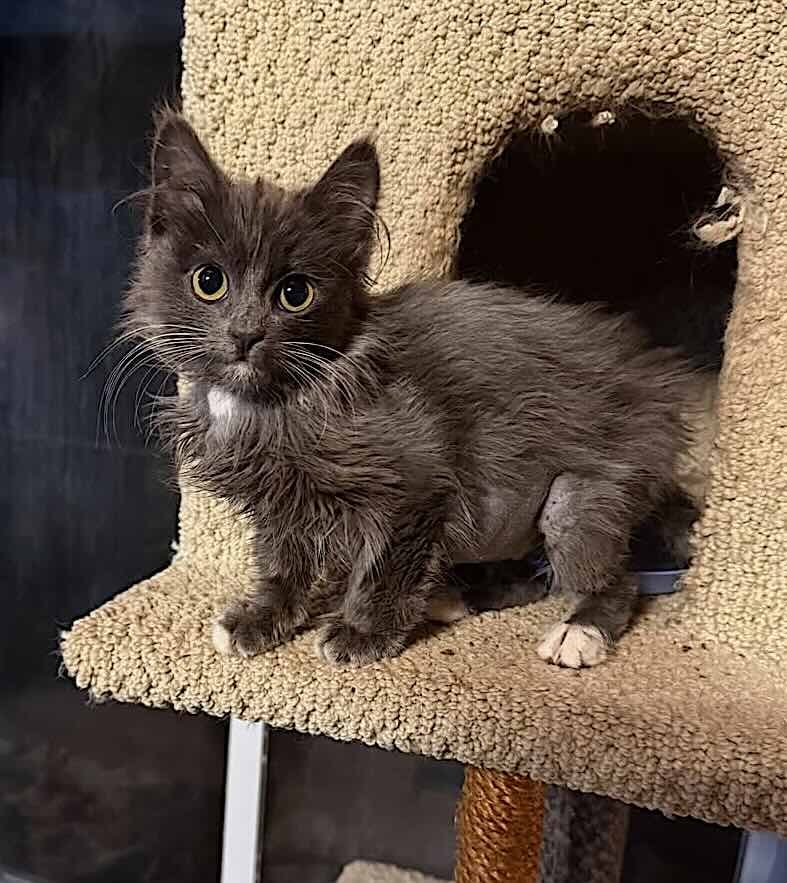
She had actually come across the answer months earlier, during her own late-night research into feline gut disorders. A condition called EPI — exocrine pancreatic insufficiency — had come up, and the symptom list had matched Lint's situation so precisely that she had raised it with her vet at the time.
It had been considered unlikely, given how rarely it appears in cats, and other avenues were pursued first. But Shelby kept pushing. She requested a referral to an internal medicine specialist, held her ground until she got one, and walked in with her suspicions already formed.
The specialist agreed immediately.
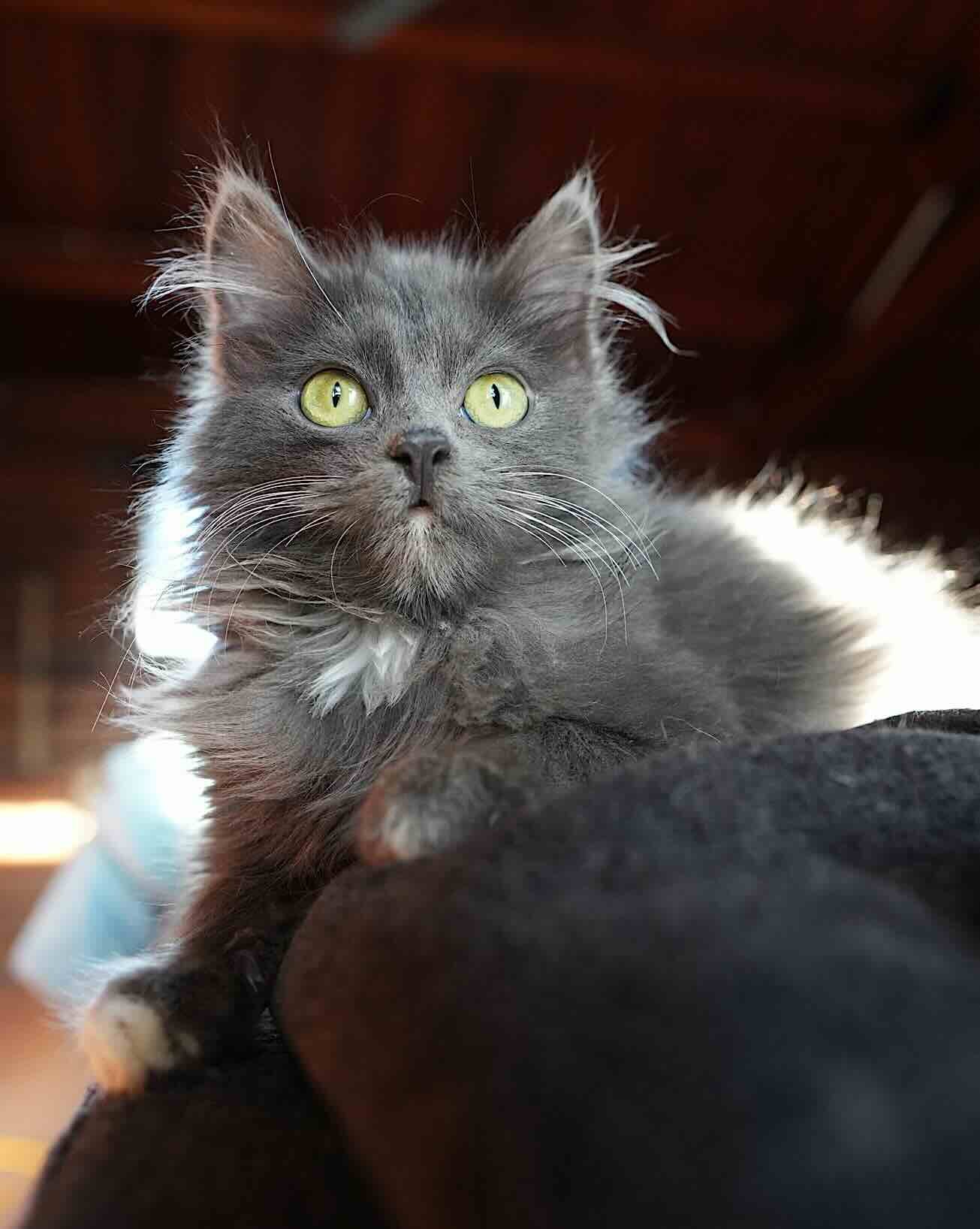
A specialised blood test was sent to a laboratory in Texas. An ice storm delayed the results. Shelby waited, while Lint continued to be uncomfortable and baffling and still, somehow, cheerful about it.
Then the results came back, and they confirmed what she had known for months. EPI. His pancreas was not producing the digestive enzymes needed to process food.
Everything he ate was passing through him largely unabsorbed — which explained all of it, every confusing and distressing symptom, the hunger that couldn't be satisfied, the weight that wouldn't come, the body fighting a battle it had no tools to win.
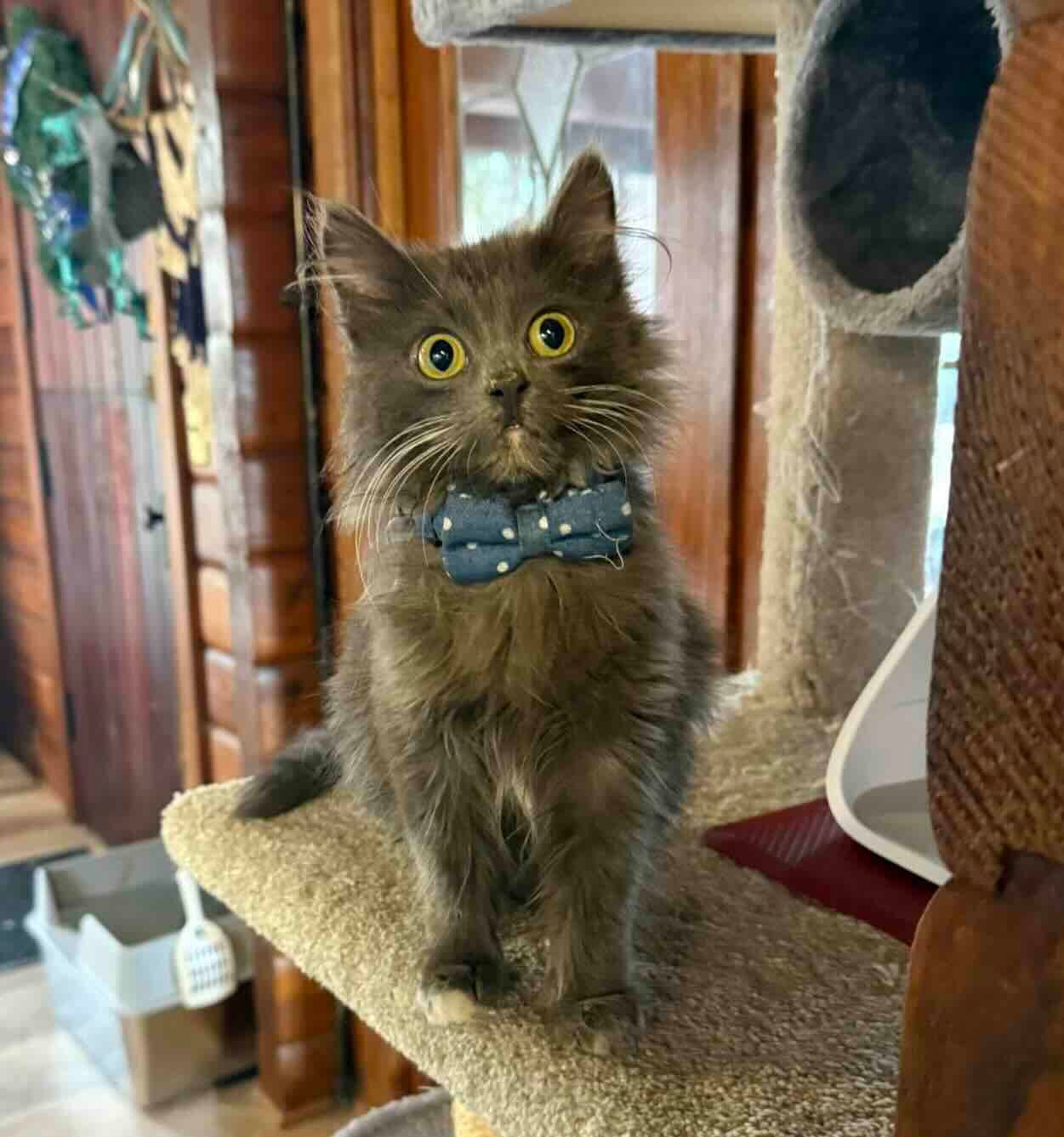
The solution, after all of that, was not complicated. Enzyme supplements mixed into his food before every meal, and B12 injections. Within four days, something shifted.
The desperate hunger softened. The stools normalised. The bloating settled. Within a month, his weight had nearly doubled.
Within six weeks, he was a different cat — filling out, playing properly, comfortable in his own body in a way he perhaps never had been since the day he wobbled out of a blackberry bush and into Shelby's life.

The cat distribution system, it must be said, knew exactly what it was doing when it sent this particular kitten to this particular human.
Someone who would fish him out of traffic's way, survive the flea situation, sit with the uncertainty of a diagnosis that didn't add up, push for answers when the easy ones weren't working, and refuse to stop until she found the right one.
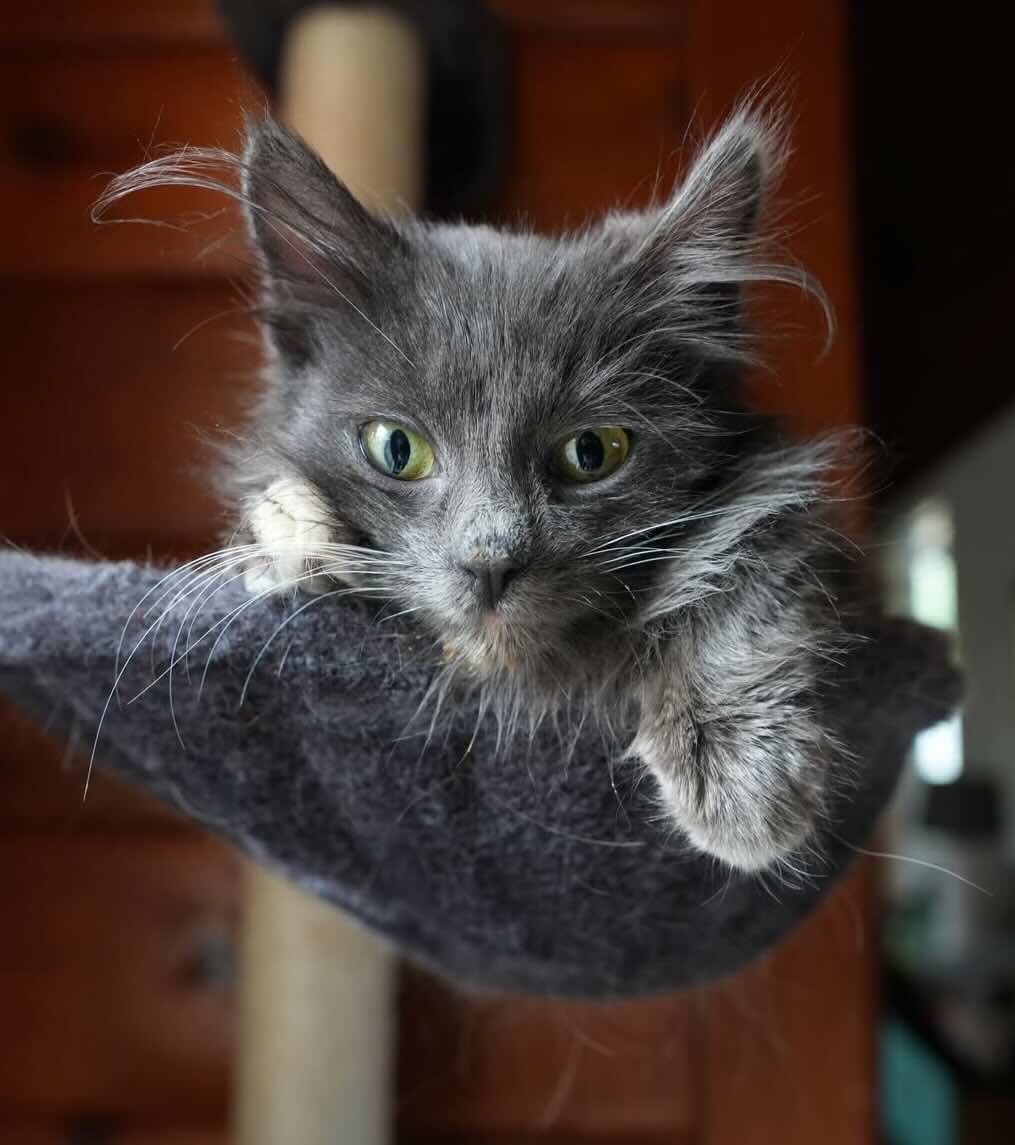
Lint still has catching up to do. He is doing it steadily and enthusiastically, in the company of Queso and the humans who turned a blackberry bush rescue into a full-time labour of love.
The cat distribution system has a remarkable track record. This one might be its finest work yet.
Take a look at the video below:
A big thank you to Shelby for sharing Lint's story with us.
You can see more of this delightful family on Instagram, Facebook and TikTok
Related story: Sickly Street Cat Overcomes Double Illness To Find Love And Happiness
More from We Love Cats and Kittens:
If you liked this, then please share our story:
And while you're at it, leave a comment and tell us what you thought!
You May Also Like...